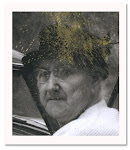
Anyone have any idea what sort of boat he might be steering? And I'm guessing he's actually holding part of the braking system.

_________


Clear Lake is a natural freshwater lake in Lake County, California and is fed by runoff flowing into many streams as well as springs in Soda Bay. Its sole outlet is Cache Creek.
Clear Lake is believed to be one of the oldest lakes in North America, due to a geological fluke. The lake sits on a huge block of stone which slowly tilts in the northern direction at the same rate as the lake fills in with sediment, thus keeping the water at roughly the same depth. Core samples of the lake's sediments, taken by U.S. Geological Survey geologists in 1973 and 1980, indicate that the lake is at least 480,000 years old. Some experts feel that Mono Lake, to the east of the Sierra Nevada in California, is older than Clear Lake. However, the sedimentary history of Clear Lake is unbroken, while Mono Lake's sediments have been disturbed by past eruptions of the Long Valley Caldera and associated volcanoes.
The geology of Clear Lake is chaotic, with numerous small faults being present in the south end of the lake as well as many old volcanoes, the largest being Mount Konocti, sitting at the middle of the lake's south shore.
Area: 69.5 sq miles (180 km²)
Surface elevation: 1,329' (405 m)
Length: 19.01 miles (30.6 km)
Fish: Largemouth bass, Channel catfish, Brown bullhead, Lavinia exilicauda, Ictalurus catus
Islands: Rattlesnake Island, Weekend Island, Fruit Island, Garner Island, Tule Island, Slater Island, Indian Island, Anderson Island
Cities: Lakeport, Clearlake, Lower Lake, Lucerne, Nice (SOURCE: Wikipedia)When I think of Clear Lake I think of hot summer days. Very hot summer days.


Donald's mother, Mary G Schnabel nee Maguire was born 20 Feb 1877 in Lima, Ohio. She married George E. Schnabel in 1897. George was born about 1876 in Ohio. If the photo was taken in 1959, she would have been about 82 years old. She died in 5 Dec 1964. She and George had about 10 children.


Clear Lake is a natural freshwater lake in Lake County, California and is fed by runoff flowing into many streams as well as springs in Soda Bay. Its sole outlet is Cache Creek.
Clear Lake is believed to be one of the oldest lakes in North America, due to a geological fluke. The lake sits on a huge block of stone which slowly tilts in the northern direction at the same rate as the lake fills in with sediment, thus keeping the water at roughly the same depth. Core samples of the lake's sediments, taken by U.S. Geological Survey geologists in 1973 and 1980, indicate that the lake is at least 480,000 years old. Some experts feel that Mono Lake, to the east of the Sierra Nevada in California, is older than Clear Lake. However, the sedimentary history of Clear Lake is unbroken, while Mono Lake's sediments have been disturbed by past eruptions of the Long Valley Caldera and associated volcanoes.
The geology of Clear Lake is chaotic, with numerous small faults being present in the south end of the lake as well as many old volcanoes, the largest being Mount Konocti, sitting at the middle of the lake's south shore.
Area: 69.5 sq miles (180 km²)
Surface elevation: 1,329' (405 m)
Length: 19.01 miles (30.6 km)
Fish: Largemouth bass, Channel catfish, Brown bullhead, Lavinia exilicauda, Ictalurus catus
Islands: Rattlesnake Island, Weekend Island, Fruit Island, Garner Island, Tule Island, Slater Island, Indian Island, Anderson Island
Cities: Lakeport, Clearlake, Lower Lake, Lucerne, Nice (SOURCE: Wikipedia)When I think of Clear Lake I think of hot summer days. Very hot summer days.

The hanzi characters comprising the city's name, 海口, mean ocean/sea and mouth/port, respectively. Thus, the name "Haikou" is also a word for "seaport". Haikou originally served as the port for Qiongshan, the ancient administrative capital of Hainan island, located some 5 kilometres (3.1 mi) inland to the south east. During its early history Haikou was a part of Guangdong province. In the 13th century it was fortified and became a military post under the Ming dynasty (1368–1644). The port is located west of the mouth of the Nandu River, Hainan's principal river. When Qiongshan was opened to foreign trade under the Treaty of Tianjin in 1858, Haikou started to rival the old administrative city. In 1926, Haikou overtook Qiongshan in population and it was declared a separate administrative city. Haikou was developed as a port during the Sino-Japanese War (1937–45) when the Japanese invaded and occupied Hainan Island from early 1939 to 1945.
Since 1949, Haikou has maintained its position as Hainan's main port, handling more than half of the island's total trade. It has replaced Qiongshan as the island's administrative capital. In 1988, Haikou was made a prefecture-level city as well as the capital of the newly-created Hainan Province.
Haikou old town contains the oldest buildings in the city and was largely built by wealthy Chinese from the mainland and some overseas Chinese who had returned to their homeland. The houses are a mixture of styles including Portuguese, French, and Southeast Asian. The streets used to be divided into different areas selling Chinese and western medicine, for silk and bespoke clothes, one for fresh fish and meat, and others for the sale of incense, candles, paper, ink, and other goods.
Various projects are currently under discussion to decide the best way to restore and preserve these historical buildings. (SOURCE: Wikipedia)


 Posts
All Comments
Posts
All Comments