Sometimes trying to research an old photo can be simply mind-numbing. When searching for a photographer I hope to find a nicely written page where someone else has done the leg work; that rarely happens. Sometimes I find a few other shots credited to the photographer; too often I find nothing.


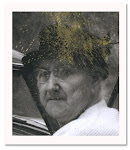
I cannot really be sure as to when this shot of the woman was taken, thus I cannot be sure who the photographer was. Yes, the obvious would be to say someone with the name “Wood” was the photographer, and perhaps that’s true, but I found at least three people who owned this studio/gallery. Perhaps if I’d continued I’d have found even more.
The first owner of the studio I find was Amos Wood, who was originally from Massachusetts. I’m finding dating his ownership to be confusing. In this document it states he was the owner from 1870-79. However, the border we see on this photo should date it from the 1860s. I also found a reference in information about the second owner claiming the name “Wood’s Gallery” had been in Marysville since 1860.
The second owner, who bought it from Wood in 1878 or 1879, was John James Reilly, who by far is the most memorable of the three I researched. Before purchasing the studio, Reilly’s work, his stereographs, were marketed by Amos Wood.
J. J. Reilly was a young Scottish emigrant in search of a new life when he arrived in California in 1856. After serving as a volunteer in the Union Army, he became a naturalized American citizen in 1866. (SOURCE: National Stereoscopic Association)In 1870 or ’71 he traveled from New York to California, where he remained for the rest of his life. A friend of John Muir, he lived and worked in Yosemite Valley for seven summers (1870-76).
In July of 1878 Reilly had moved from San Francisco to Marysville, where he established himself as a portrait and landscape photographer.
He ran an advertisement in one of the local Marysville papers which touted:
...his many years of experience in posing sitters, his chiaroscuro lighting effects (the so-called “Rembrandt effect”), “the latest style” (bust portraits in three-quarter profile), correct exposures with shadow detail, great skill in retouching eyes and in hand-tinting lips and cheeks, and "a picture that never fades…Fine works is done in Woods Photo Gallery, Odd Fellows Bldg. Marysville by J. J. Reilly, inventor of the new magic process for making the baby’s pictures in from one to two seconds." (SOURCE: National Stereoscopic Association)Reilly retained the gallery name, which local residents had associated with the business since 1860. He was also retained by the city of Marysville to take mug shots of local prisoners.
In 1886:
Reilly abandoned his second wife and his life’s work in Marysville. His master set of stereo negatives—a d of work twenty years in the making—was acquired by Enno Nesemann, the proprietor at Woods Gallery for the next fourteen years. Like his predecessors in the small, country town, Nesemann earned a lving by taking “dogtypes” and “mug shots”, and by marketing views to a regional audience. (SOURCE: National Stereoscopic Association)In 1890 J. J. Reilly was listed as an “artist” at 313 Stockton Street in San Francisco.
In 1891 he wrote a letter of inquiry to C. W. J. Johnson, a portrait photographer in Monterey, about a job running Johnson’s gallery:
“Have you found a man yet to run your gallery for the summer? If not, I think I would try it, provided the place would pay anything above living expenses. I have been in the business for 25 year, but always for myself till lately.Here is a photo Reilly took of the Del Monte Hotel in Monterey.
In 1893 he ran a gallery in Eureka, California called The New York Photograph Gallery with a partner named Evans. They remained in Eureka for three months.
Sadly, Reilly’s life did not end well. In 1894, back in San Francisco, he was boarding at the Pioneer House, on the corner of Fourth and Mission Streets.
He had already exhausted his disability pension. He was out of work and running out of money. Infirmed and despondent, he wrote the following suicide note:
This is to certify that I, J. J. Reilly, am tired of this life and so close up my accounts with all humanity on this earth. My reasons for doing so are: First, I am 55 years old: I have been disabled in the War of the Rebellion. Second, I am out of money and can find no work, so life to me is not worth living for. What are the few days, weeks, months or years which might be ahead of me? I am no good to any one, neither to myself, and why should I allow myself to suffer and go hungry? No, I wll never do it. And as I see the country is in a very bad condition, and the Government is rotten, and it is only bloodshed that will purify it. (SOURCE: National Stereoscopic Association)On June 27th of 1894 Reilly, in his room at the Pioneer House, locked his door, and shut the window. He extinguished his lamp then turned the gas on full “and went to bed to die.”
On June 28th he was found by a chambermaid. He was rushed to the hospital where he succumbed to the effects of carbon monoxide asphyxiation on June 30th. His body, as requested by Reilly, was given to the Dr. Toldan Medical College for study because “I am afflicted with liver and other troubles, which may be of use to the medical men.”
Reilly was survived by two ex-wives and a son from his first marriage. A trunk filled with personal effects was shipped to his son. His work survives today as stereographs collectors covet.
There is much more to read about J. J. Reilly, and Enno Nesemann, here, including a photo of Reilly with his second wife, Jennie.
The third owner of Wood’s Gallery, as I mentioned above, who bought it from J. J. Reilly, was Enno Nesemann.
Enno was born in 1861 in Marysville, California and died in 1949 in Berkeley, California.
In 1866 Enno, age 5, sailed from Bremen, Germany to New York aboard the SS Bremen. He sailed with his father, Diedr, age 37, a baker; his mother, Lisette, age 30; and his sister, Elise, age 6. They are listed as residents of San Francisco. No information is given as to the reason for this trip. (SOURCE: Immigrants Ships)
Enno Nesemann operated Woods Gallery in the Odd Fellows Building, located at the corner of Third and D Street, in Marysville, California from 1883-1900
Nesemann appears to have acquired many of Reilly’s work since he continued to reproduce Reilly’s stereographic images.
Click here to see a stereograph of a giant redwood in Mariposa Grove taken by Nesemann and here to see a photo of Denny Hall at the University of Washington around 1890.
Nesemann was also known for creating humorous stereographs.

(SOURCE: Taylor Francis Online)
Click here to see one of Nesemann's humorous images in the Library of Congress.
Sadly, after all of this, I have no information about the woman in this portrait other than that it was taken in Marysville, California. To read about the history of Marysville, California click here. One of the men listed above interacted with this woman. She will remain a complete mystery.


 Posts
Posts