Showing posts with label CDV. Show all posts

11/20/14

GLENN CLOSE, Time Traveling Celebrity


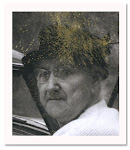
The incredibly kind and beautiful Katherine of Photobooth Journal sent me this photo to add to my Time-Traveling-Celebrity series. Thank you Katherine. And I hope you are beginning to feel better. Miss you.

Ladies and Gents, I give you Glenn Close, Time Traveling Celebrity, most likely doing some research for her Academy Award nominated part for Albert Nobbs.


Click on image to see it larger.

Don't believe me? Take a look at the poster for the film Albert Nobbs.


Again, thank you Katherine. You are so kind.
_________________

to find the perfect gifts for those hard to buy for friends.


Volume 6 will be for sale soon!

5/27/12

The MOTHER AND SON with forensic photographer H. Seymour Squyer


Originally I was going to make this a simple post entitled "Memorial Day and Those Who Waited." The inspiration being this woman and boy who are unknown, but the photograph looks like the sort a Union Soldier might have carried in his pocket.


Then I decided to do a little research about the photographer, H. Seymour Squyer. Again, ephemera takes me on a journey.

H. Seymour Squyer was born November 4, 1848. He was a photographer at 77 Genesee Street in Auburn, New York. In the 1880 census Squyer is 31 and married to Francis (Kupenhouser?), age 30. They have two sons, Frank age 3 and Fred around 10 months.

From the brief information I’ve found, Squyer did portrait photography, criminal forensic photography, and stereographs. I cannot find actual examples of the criminal work or stereographs, merely references to them.

Here you can read an article from the Auburn New York Weekly Bulletin about a trial Squyer was involved in. He took photographs of two signatures which were then enlarged allowing a court to determine if a signature on a will was forged.


Here you will find an article in which Squyer was a witness in an arson trial.


And here you can read more about the trial.


Another trial in 1897 in which he is questioned about the length of a flame from a Sheldon revolver and photographs he took.

Here is an article about a trial in which Squyer took a photograph of a page from an accounting book.

On May 11, 1892 Squyer had his own run in with the law.


In the 1900 census Squyer, age 57, is married to Harriet M., age 38. Within a few years Squyer was dead. On December 19, 1905 the following obituary appeared in The Auburn Citizen.


He was buried on December 21, 1905 in the Fort Hill Cemetery.

Here is an article for Squyer’s will dated January 26, 1906.


On January 23, 1906 the following appeared in the Auburn Semi-Weekly Journal in regards to Squyer’s will apparently being contested.


That is not the last we hear of Squyer. In The Citizen-Advertiser in Auburn, New York, on June 30, 1949 there is the following article in which we are told that Squyer's photographic plates were nearly used as glass in a greenhouse.
Click on image to see it larger. 
Rare Print Recalls Days of Yore at Wells
Reminiscent of days gone by is a picture of Glen Park, once the Aurora home of Henry Wells, founder of the Wells Fargo Express Company and American Express Company whose generosity made possible Wells College at Aurora. The picture of the college is among a collection of photographic plates of Wells college and the Village of Aurora, given to the college by George Underwood, Jr., of this city.
These plates were made about 1900 by H. Seymour Squyer for many years a leading photographer in Auburn. His studio was located at 180 Genesee Street, where they Mohican store now stands. Shortly after Squyer’s death in 1905, G. G. Hayden, who had just built a house at the top of Chadell Place in Auburn, acquired from the Squyer estate a ton or more of the photographic plates to used in a projected greenhouse for which he had difficulty in obtaining the necessary glass. Hayden’s death cancelled the greenhouse plans, and the old plates remained on the grounds, crated in wooden boxes in an old chicken house. Here Mr. Underwood found them when he bought the Hayden place in 1945.
The task of sorting out the plates has been a long one; some of them were protected by individual envelopes, but very few were labeled or identified in any way. However, Mr. Underwood has succeeded in “getting some of them into the hands of those who should have them.”
He has given the following to Wells College: Five views of Glen Park, taken shortly before the former home of Henry Wells was purchased and given to the college by the alumnae in 1907; six exterior views of Main Building and Morgan Hall; three interiors of Main, showing the old gymnasium, a parlor, and the museum; six vies of the lake shore and the road approaching Aurora from the south; and early picture of the Aurora Inn, which was built in 1883 (?) Several of them appeared in early issues of the Wells College Catalogue.
Mr. Underwood’s collection also contains some wonderful views of Auburn and boating on Owasoo Lake; possibly a picture of the first Boys Conference every held by the Y. M. C. A in the United States, also some plates of the old asylum, later the Women’s Prison in Auburn.

Mr. Underwood plans to turn over to the County Museum all plates for “Which he cannot find owners.” A few prints at a time will be displayed and identifications requested.
You can visit this page to find even more articles in which H. Seymour Squyer is mentioned.

Here, at the Cabinet Card Gallery, you can see a wedding photograph taken by Squyer.

Ultimately, what Squyer is famous for is a portrait he took of Harriet Tubman available at the Smithsonian National Portrait Gallery.


And so it goes. I start out with just a photo and then I get sucked in.

Should anyone have any more information about Squyer I'd gladly post it or link to it.

UPDATE: Here's a link to a photo of Robert L. Drummond, in civilian clothes, a soldier who served in a New York State military unit during the Civil War.

5/21/12

Amos Wood, J. J. Reilly, Enno Nesemann, and THE UNKNOWN WOMAN AT WOOD'S GALLERY


Sometimes trying to research an old photo can be simply mind-numbing. When searching for a photographer I hope to find a nicely written page where someone else has done the leg work; that rarely happens. Sometimes I find a few other shots credited to the photographer; too often I find nothing.


In the case of this photo I actually found quite a bit of information about the different photographers who owned the gallery/studio. I only found one other photo with the same Wood’s imprint as shown above, which is available here on eBay.

I cannot really be sure as to when this shot of the woman was taken, thus I cannot be sure who the photographer was. Yes, the obvious would be to say someone with the name “Wood” was the photographer, and perhaps that’s true, but I found at least three people who owned this studio/gallery. Perhaps if I’d continued I’d have found even more.

The first owner of the studio I find was Amos Wood, who was originally from Massachusetts. I’m finding dating his ownership to be confusing. In this document it states he was the owner from 1870-79. However, the border we see on this photo should date it from the 1860s. I also found a reference in information about the second owner claiming the name “Wood’s Gallery” had been in Marysville since 1860.


The second owner, who bought it from Wood in 1878 or 1879, was John James Reilly, who by far is the most memorable of the three I researched. Before purchasing the studio, Reilly’s work, his stereographs, were marketed by Amos Wood.
J. J. Reilly was a young Scottish emigrant in search of a new life when he arrived in California in 1856. After serving as a volunteer in the Union Army, he became a naturalized American citizen in 1866. (SOURCE: National Stereoscopic Association)
In 1870 or ’71 he traveled from New York to California, where he remained for the rest of his life. A friend of John Muir, he lived and worked in Yosemite Valley for seven summers (1870-76).

In July of 1878 Reilly had moved from San Francisco to Marysville, where he established himself as a portrait and landscape photographer.

He ran an advertisement in one of the local Marysville papers which touted:
...his many years of experience in posing sitters, his chiaroscuro lighting effects (the so-called “Rembrandt effect”), “the latest style” (bust portraits in three-quarter profile), correct exposures with shadow detail, great skill in retouching eyes and in hand-tinting lips and cheeks, and "a picture that never fades…Fine works is done in Woods Photo Gallery, Odd Fellows Bldg. Marysville by J. J. Reilly, inventor of the new magic process for making the baby’s pictures in from one to two seconds." (SOURCE: National Stereoscopic Association)
Reilly retained the gallery name, which local residents had associated with the business since 1860. He was also retained by the city of Marysville to take mug shots of local prisoners.

In 1886:
Reilly abandoned his second wife and his life’s work in Marysville. His master set of stereo negatives—a d of work twenty years in the making—was acquired by Enno Nesemann, the proprietor at Woods Gallery for the next fourteen years. Like his predecessors in the small, country town, Nesemann earned a lving by taking “dogtypes” and “mug shots”, and by marketing views to a regional audience. (SOURCE: National Stereoscopic Association)
In 1890 J. J. Reilly was listed as an “artist” at 313 Stockton Street in San Francisco.

In 1891 he wrote a letter of inquiry to C. W. J. Johnson, a portrait photographer in Monterey, about a job running Johnson’s gallery:
“Have you found a man yet to run your gallery for the summer? If not, I think I would try it, provided the place would pay anything above living expenses. I have been in the business for 25 year, but always for myself till lately.
Here is a photo Reilly took of the Del Monte Hotel in Monterey.

In 1893 he ran a gallery in Eureka, California called The New York Photograph Gallery with a partner named Evans. They remained in Eureka for three months.

Sadly, Reilly’s life did not end well. In 1894, back in San Francisco, he was boarding at the Pioneer House, on the corner of Fourth and Mission Streets.
He had already exhausted his disability pension. He was out of work and running out of money. Infirmed and despondent, he wrote the following suicide note:
This is to certify that I, J. J. Reilly, am tired of this life and so close up my accounts with all humanity on this earth. My reasons for doing so are: First, I am 55 years old: I have been disabled in the War of the Rebellion. Second, I am out of money and can find no work, so life to me is not worth living for. What are the few days, weeks, months or years which might be ahead of me? I am no good to any one, neither to myself, and why should I allow myself to suffer and go hungry? No, I wll never do it. And as I see the country is in a very bad condition, and the Government is rotten, and it is only bloodshed that will purify it. (SOURCE: National Stereoscopic Association)
On June 27th of 1894 Reilly, in his room at the Pioneer House, locked his door, and shut the window. He extinguished his lamp then turned the gas on full “and went to bed to die.”

On June 28th he was found by a chambermaid. He was rushed to the hospital where he succumbed to the effects of carbon monoxide asphyxiation on June 30th. His body, as requested by Reilly, was given to the Dr. Toldan Medical College for study because “I am afflicted with liver and other troubles, which may be of use to the medical men.”

Reilly was survived by two ex-wives and a son from his first marriage. A trunk filled with personal effects was shipped to his son. His work survives today as stereographs collectors covet.

There is much more to read about J. J. Reilly, and Enno Nesemann, here, including a photo of Reilly with his second wife, Jennie.


The third owner of Wood’s Gallery, as I mentioned above, who bought it from J. J. Reilly, was Enno Nesemann.

Enno was born in 1861 in Marysville, California and died in 1949 in Berkeley, California.

In 1866 Enno, age 5, sailed from Bremen, Germany to New York aboard the SS Bremen. He sailed with his father, Diedr, age 37, a baker; his mother, Lisette, age 30; and his sister, Elise, age 6. They are listed as residents of San Francisco. No information is given as to the reason for this trip. (SOURCE: Immigrants Ships)

Enno Nesemann operated Woods Gallery in the Odd Fellows Building, located at the corner of Third and D Street, in Marysville, California from 1883-1900

Nesemann appears to have acquired many of Reilly’s work since he continued to reproduce Reilly’s stereographic images.

Click here to see a stereograph of a giant redwood in Mariposa Grove taken by Nesemann and here to see a photo of Denny Hall at the University of Washington around 1890.

You can see a painting he did of the Golden Gate, not the bridge, but the opening from the ocean into the San Francisco Bay, here.

Nesemann was also known for creating humorous stereographs.


Click here to see one of Nesemann's humorous images in the Library of Congress.


Sadly, after all of this, I have no information about the woman in this portrait other than that it was taken in Marysville, California. To read about the history of Marysville, California click here. One of the men listed above interacted with this woman. She will remain a complete mystery.

5/17/12

The mystery of the photographer E. C. SWAIN


E. C. Swain was a photographer in Malden, Massachusetts within the county of Middlesex. Born in 1835 in Maine, he is shown in the 1870 Massachusetts census as being 35 years old and married to a 22 year old woman whose name begins with an “M” whom I believe to be Mary, also born in Maine. There are no children listed. He is listed as a photographer.

In the 1880 census there is a Mary A. Swain listed in Malden, Massachusetts as being 32 years old, with her occupation as “keeping house.” There are two sons listed, Fred A., age 9, and a name that begins with an “H” which I cannot read, age 6. E. C. is not in the census.

What became of E. C. between the years of the 1870 and 1880 census? Did he die? Did they separate? And what actually was his name? What did the “E” and “C” stand for? I cannot find any written biographical information about him.

There is a book, Malden, published by the Malden Historical Society, that contains many landscape shots taken by Swain. The photo below, from the book, shows his fascinating photography studio in Malden. Of his photos in the book, the dates vary from the mid-1860s to 1875.


You can see more images from the book here, and the book is available for sale at Amazon.

In 1868 a quote by Swain is shown in a book entitled The American Carbon Manual: The Production of Photographic Prints in Permanent Pigmenets. He supplied a testimonial for a journal called The Philadelpha Photographer.


Searching for photos taken by him I find that most of the shots are landscapes, many stereographic cards. I have found very few portraits.

The portrait, to the left, is currently available on eBay which means this link may not work in the future.

Here you’ll find a photo taken by Swain in 1870 of a cemetery in Boston.

Here you’ll find a stereographic card showing the “Coliseum.”

Here you’ll find the back of one of his cabinet card advertisements, which you'll note is different than the photo I show below which is in my collection.

Here is another image for sale on eBay, another landscape, this time of Saugus, Massachusetts.

And finally, what began my research for this post is the photo below given to me by my friend Bert. Other than knowing Swain took this shot, I have no other information.


Click on image to see it larger.


Perhaps sometime in the future someone will be able to identify this body of water with the waterfall and buildings in the background. For now let it be the beginning of the “Who was E. C. Swain?” mystery.

UPDATE: I knew someone would come along and add some pieces to the puzzle. Thank you AnyJazz@!
How odd that he appears nowhere in the 1880 census. There are references to him before and after. He seems still living with Mary, Fred and Herbert in the census of 1900 and with Mary and Herbert (then 36) in the census of 1910. Perhaps he was traveling in 1880 and when enumerated, the census taker fouled up the name so badly that the index search does not pick him up. He could have been “on location” for a scenic shoot.

I can clear up the names I think.

Edwin Chandler Swain (1835-1911)
Mary Alden Lovejoy (Swain) (1847-1933)
Son-Fred Allen Swain (1871-1963)
Son-Herbert (Burton) Smith Swain (1873-1922)

UPDATE: The following images are provided by reader Chris who has this for sale on ebay as of 5/23/14. Thanks Chris!


UPDATE: The latest from a reader:
Some of his photos are on file at the Wayland Historical Society files..We figured out today that they were likely taken between 1878 and 1882 due to the fact that there was a firehouse in one of them located in a specific spot. It was built in 1878 and moved in 1882. Thus, he was in Massachusetts during the time that you mentioned.

UPDATE: 10.28.2020 

I received the following image of a house on Appleton Street in Malden, MA from collector Andrew Cook. The framed image shows "Photo by E.C. Swain" on the back. It's a grand house with a very beautiful yard and fence. As so often happens over time the house is no longer quite so grand. I believe the color image below shows the house today as seen on Google Street View. The extensive lawn is gone, the fence, and much of the architectural decorations—such as the shutters—are now gone. But if you pay attention to the roof you'll see that the iron work at the top and the two chimneys are still there. Where once this house stood on a corner, it is now simply another lovely house on a street filled with old lovely houses. It also goes to show how putting power lines underground would improve the overall look of the neighborhood. Those damnable black cables running here and there really do distract.

If anyone has anything to add about this house Mr. Cook would be most grateful for any information. Should you wish to contact him direct: andyc222@hotmail.com.

 Click on images to see them larger.