Showing posts with label Montana. Show all posts

6/28/13

HUNGRY HORSE DAM under construction


Looking for an image for this weeks Sepia Saturday had me thinking I’d have nothing. I don’t have any vintage photos of caves unless I drag out some old Viewmaster slides of Carlsbad Caverns. That was tempting until I remembered this photo. Now is the perfect time to post this vintage snapshot.


Click on image to see it larger.

Looks like nothing more than an old car on a snowy mountain road, but then the title had me searching for something more.


This image shows the Hungry Horse Dam under construction in Montana. I'm guessing it was a Christmas card for the workers to send back home.


Click on image to see it larger.
Hungry Horse Dam is an arch dam on the South Fork Flathead River in the Rocky Mountains of the U.S. state of Montana. It is located in Flathead National Forest, in Flathead County, about 15 miles (24 km) south of the west entrance to Glacier National Park, 9 miles (14 km) southeast of Columbia Falls, and 20 miles (32 km) northeast of Kalispell. The Hungry Horse project, dam, and powerplant are operated by the United States Bureau of Reclamation.

At 564 feet (172 m) in height, the dam was the third largest dam, and second highest concrete dam, in the world at the time of its completion in 1953, with a volume of 3,100,000 cubic yards (2,400,000 m3). The dam's spillway is the highest morning glory structure in the world. The spillway is controlled by a 64-by-12-foot (20 by 3.7 m) ring gate.
Construction of Hungry Horse Dam was authorized by the Act of June 5, 1944 (58 Stat. 270, Public Law 78-329). Construction began in April 1948 and was completed on July 16, 1953. The purpose of the Hungry Horse Project, authorized by law, are irrigation, flood control, navigation, streamflow regulation, hydroelectric generation, and other beneficial uses such as recreation. However, no irrigation facilities were built and the project has no irrigation obligations. Hydroelectric power generation is the primary purpose of the dam today. Flood control is the dam's other main purpose. The dam, reservoir, and surrounding area are used for recreation. (SOURCE: Wikipedia)

Click on image to see it larger.

So how did the place get the name Hungry Horse?
The severe 1900-01 winter left two freight horses lost and starved in the rugged Flathead River wilderness. Found a month later, their owners nursed them back to health. "Hungry Horse" became the name of a nearby mountain and creek and, later, this Reclamation project.
The first permanent settlers entered the Flathead Valley in 1860. As the Flathead Valley grew in the new century, so did the belief that a new dam could reduce flooding and harness the river's force to produce electricity. Montana citizens worked for 30 years toward bringing this belief to life. Federal agencies surveyed lands and began efforts toward Congressional approval to build a large water project. (SOURCE: US Bureau of Reclamation)
To read more about the history of the area click here.

And this is what the dam looks like today.

1/5/12

In search of RICHARD LAWSON LEVELLE


Online research can be notoriously bad, thus I'm always skeptical when someone says they've discovered they're related to some famous person in history. Yeah, well, I'm also related to one of the all time chump tv/radio talk show hosts through a marriage (thus leaving me a few degrees away from nearly every famous person who has lived for the past several decades, including Kevin Bacon), but it means nothing. In my case it's true and can be verified, but for others, with dreams of ancestry grandeur, I have to say, "Check for typos." Case in point...

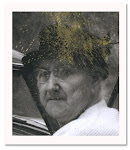
I bought this photo last week from a bin of photos at an antique store. The obvious information given is from the actual photo and what is written on the back. Most likely Richard Lawson Levelle worked for the railroad since his hat looks like one worn by a railroader and the carts in the background are reminiscent of baggage carts from long ago. He was a stepfather and the photo was taken in Butte. I'm guessing Butte, Montana. That's my jumping off point. And so my online research began.


Click on either image to see them larger.

Now, thinking about how many people currently live in Montana, a sparsely populated state, it would be hard to believe that in the late 1920s there would be two men of the same name, one black and one white, right? I mean, if they were both named Joe Smith I'd buy it, but "Lawson" and "Levelle" don't seem that common when put together.

Here is what I found and the odd turn it took.

Lawson Richard Levelle (as written on several online documents) was born in Hopkinsville, Christian County, Kentucky around 1887 (though in another document “estimated birth” is listed as 1885). His father was Richard Levelle and his mother was Sarah Hibber. On December 30, 1928 Lawson married Agnes Ida Williamson, born in Pocatello, Idaho. She was 29 years old, and a widow with 5 children: Elizabeth A. Williamson (age 11), Paul H. Williamson (age 9), Genevieve H. Williamson (age 8), Eloise M. Williamson (age 5), Thelma M. Williamson (age 4). Her maiden name was Mason; her mother was Sarah Mason, her father Frank Mason. Her previous married name was Williamson.

Both Richard/Lawson and Agnes are listed as negro on various documents, except on the marriage certificate where they’re both listed as white (Montana, County Marriages, 1865-1950). That seems strange. Two Richard Levelle's in Wyoming around the same time, both stepfathers. So apparently some of the information I’ve gathered is incorrect. Were there two Richard Lawson Levelle’s or Lawson Richard Levelle’s in Montana in 1930, both stepfathers and married to a woman named Agnes? It all gets a little confusing and I don’t have access to enough information to really figure this out.

I can say that a Richard Levelle died on February 6, 1944 in Deer Lodge, Montana. He was 59 years old. Marital Status is listed as “Unknown.”

Just to make things more confusing, on the marriage certificate their marriage is listed as having taken place in 1928 and yet the witness information says 1929. The record was filed on February 2, 1929. And the marriage license is initially dated December 24th 1929 with the nine then crossed out and an “8” written in. So if there’s that much confusion as to dates I’m guessing they could also confuse if Richard and Agnes were white and not “negro”…yeah, I doubt it.

Who this man was shall remain a mystery.

Again, a little piece of ephemera takes me down a confusing path.

UPDATE: Reader Karl Mousley, has contacted me with information about Richard and Agnes' dates of death via the Find a Grave site. Thank you Karl!
According to the 1940 census Karl was working as a janitor.
Richard's death Feb 6, 1944, Agnes died August 23, 1977