Showing posts with label Matson Liner. Show all posts

1/15/15

ALOHA from a Matson Liner


It was 56 years ago this month that I was on my way to Hawaii aboard a Matson Liner. This little tyke looks about half the age I was and I'm guessing it was in the 1930s. They had either just arrived or were about to set sale for California. If they'd just arrived they would soon be staying at, most likely, the Moana or the Royal Hawaiian.

I remember being covered to my nose with leis, the scent heavenly. And then once at our hotel/apartment we placed them all over the room. They lasted for days and then began to whither and turn brown. No problem. Right outside the front door was a plumeria bush, its scent drifted in through the louvered windows all day and night.

On the other hand, if they were leaving they should have soon be throwing the leis overboard hoping they would float to shore insuring they would again return to Hawaii. Can't do that from a plane. Some of the magic is gone.


Click on image to see it larger.


_________________

6/27/13

Let's visit HAWAII IN THE 1930s: Rice field in Waikiki


I actually have no idea where this photo was taken in Hawaii, but when shown to my father he said he remembers areas of Waikiki looking like this when he visited in 1945. No matter where it was actually shot, it's the Hawaii of long ago.


Click on image to see it larger.

On the far right there appears to possibly be railroad tracks with a car. Could this be part of the old Oahu Railway and Land Company?
This Company is now running trains to Waianae, 33% miles from Honolulu, the new Extension of fifteen miles beyond Ewa Plantation having been completed July 1, 1895. The equipment of the road is first-class in every particular. Excursion rates are maintained from Saturday morning till Monday of each week. A first-class hotel is in course of erection at Waianae, and will afford unequalled bathing facilities. A delightful ride through varied and unsurpassed scenery, a day of rest and pleasure at Waianae, make an excursion on the Oahu Railway one of the most attractive features of the Islands, not only to tourists, but to residents of Honolulu as well.

Pearl City, located on the famous Pearl Harbor, the proposed naval and coaling station of the United States, has been, laid out in streets, provided with a complete system of water works, picnic grounds, dancing pavilion, boat houses, etc. Over $100,000 in lots have been sold to 150 different purchasers, and a number of residences erected; a few very desirable lots may yet be had on very reasonable terms.

With a perfect climate and the pure air from mountain and sea, no other spot on earth can equal this as a health resort. Dr. P. S. Kellogg, of Battle Creek, Mich., says of this locality in a recent letter: "When we had reached a height of 1,000 feet, we could observe a marked difference in the atmosphere; so cool, pure and bracing was it that we were impressed with the thought that here, removed from the con-laminating influences of unsanitary surroundings, was an ideal spot for the invalid to find rest for body and mind." (SOURCE: History of Later Years of the Hawaiian Monarchy)
This is the last image I have from this series. I can only hope to someday find more.

6/24/13

Let's visit HAWAII IN THE 1930s: Nuʻuanu Pali


One of my fondest memories of going over the Nu'uanu Pali was stopping at the banana stand at the bottom. It was thick with banana groves and the best tasting bananas I've ever had. Sweet small apple bananas. We'd buy several bunches and they'd never make it home.


Click on image to see it larger.

On the other hand, my father has memories of riding in a bus over the Pali in the 1940s. He said it was a hair raising experience.
The Nuʻuanu Pali has been a vital pass from ancient times to the present because it is a low, traversable section of the Koʻolau mountain range that connects the leeward side of the mountains, Honolulu to the windward side, Kailua and Kāneʻohe. The route drew settlers who formed villages in the area and populated Nuʻuanu Valley for a thousand years.

The Nuʻuanu Pali was the site of the Battle of Nuʻuanu, one of the bloodiest battles in Hawaiian history, in which Kamehameha I conquered the island of Oʻahu, bringing it under his rule. In 1795 Kamehameha I sailed from his home island of Hawaiʻi with an army of 10,000 warriors, including a handful of non-Hawaiian foreigners. After conquering the islands of Maui and Molokaʻi, he moved on to Oʻahu. The pivotal battle for the island occurred in Nuʻuanu Valley, where the defenders of Oʻahu, led by Kalanikūpule, were driven back up into the valley where they were trapped above the cliff. More than 400 of Kalanikūpule's soldiers were driven off the edge of the cliff to their deaths 1,000 feet below.

In 1845 the first road was built over the Nuʻuanu Pali to connect Windward Oʻahu with Honolulu. In 1898 this road was developed into a highway which during construction 800 skulls were found believed to be the remains of the warriors that fell to their deaths from the cliff above.[5] This road was later replaced by the Pali Highway and the Nuʻuanu Pali Tunnels in 1959 which is the route used today.

The now extinct bird, the Oʻahu nukupuʻu, was last collected in this valley. (SOURCE: Wikipedia)

6/23/13

Let's visit HAWAII IN THE 1930S: The Kodak Hula Show


Anyone who visited Oahu, Hawaii, between 1937 and 2002 had the chance each day to visit a free and wonderful hula show in Kapiolani Park. Between 1937 and 1999 it was sponsored by Kodak, and for good reason. It was a beautifully colorful show with the palm trees and the Pacific Ocean as it's backdrop. I have slides and an old 8mm film my dad shot.

Kodak pulled out their sponsorship in 1999. The Hogan Family Foundation took over and kept it going until 2002. I haven't been able to find anything definitive to say if the show has been resumed. It's a shame to think it's gone.

Below is a shot taken in the 1930s. I wish I could identify the performers. Perhaps, someday, someone will spot this and step forward to say, "That's my tutu (grandmother) dancing!" That would be nice.


Click on image to see it larger.

You can see other vintage Hawaiian snapshots from this series by clicking on "Hawaii" in the labels below.

6/20/13

Let's visit HAWAII IN THE 1930s: The Moana Hotel


The third image from the vintage snapshots of Hawaii I recently found, the Moana Hotel. I find it fascinating how empty it appears. One lone person standing in front of it. No cars. No tourists. No life. A grand building with nothing particularly grand going on.


Click on image to see it larger.

Today the large park like lawn is gone, replaced by busy Kalakaua Avenue. Try to imagine a hotel like this being built today. Instead of spreading out they all go up and up and...look down on the hotels from long ago. Click here to see an old image of the beach side.
The Moana Hotel, also known as the First Lady of Waikīkī, is a famous historic hotel on the island of Oʻahu, located at 2365 Kalākaua Avenue in Honolulu, Hawaiʻi. It is today one of three buildings that make up the Moana Surfrider, A Westin Resort & Spa. Built in the late 19th century as the first hotel in Waikiki, the Moana opened its doors to guests in 1901, becoming the first large hotel in Waikīkī. The Moana Hotel is regarded as the flagship in Hawaiʻi tourism, and has been listed on the National Register of Historic Places. In Hawaiian, moana means "open sea" or "ocean."

The wealthy Honolulu landowner, Walter Chamberlain Peacock, in an effort to establish a fine resort in the previously neglected Waikiki area of Honolulu, incorporated the Moana Hotel Company in 1896. Working with a design by architect Oliver G. Traphagen and $150,000 in capital, The Lucas Brothers contractors completed the structure in 1901. Construction of The Moana marked the beginning of tourism in Waikiki, becoming the first hotel amidst the bungalows and beach houses.

The Moana's architecture was influenced by European styles popular at the time, with Ionic columns and intricate woodwork and plaster detailing throughout the building. The Moana was designed with a grand porte cochere on the street side and wide lānais on the ocean side. Some of the 75 guest rooms had telephones and bathrooms (unusual at the time), and the hotel featured a billiard room, saloon, main parlor, reception area, and library. Peacock installed the first electric-powered elevator in the islands at the Moana, which is still in use today.

Design features of the original structure that survive to this day include extra-wide hallways (to accommodate steamer trunks), high ceilings, and cross-ventilation windows (to cool the rooms prior to air conditioning).

The Moana officially opened on March 11, 1901. Its first guests were a group of Shriners, who paid $1.50 per night for their rooms. Peacock did not find success with his endeavor, and sold the hotel to Alexander Young, a prominent businessman with other hotel holdings. The Young estate operated the hotel until the Matson Navigation Company bought the property in 1932 for $1.6 million.

Over the course of Matson's ownership of the Moana, it grew along with the popularity of Hawaiian tourism. Two floors were added in 1928 along with Italian Renaissance-styled concrete wings on each side of the hotel, creating its H shape seen today.

The hotel's outward appearance was altered slightly over the years, including "updates" to such designs as Art Deco in the 30's and Bauhaus in the 50's.

From 1935 to 1975, the Moana's courtyard hosted the Hawaii Calls live radio broadcast. Legend has it that listeners mistook the hiss of the radio transmission as the waves breaking on the beach. When learning of this, the host instructed the soundman to run down to the waterfront to actually record the sound, which became a staple of the show. (SOURCE: Wikipedia)

6/19/13

Let's visit HAWAII IN THE 1930s: Royal Hawaiian Hotel and Waikiki Beach


Another image from 1930s Hawaii.


Click on image to see it larger.

All of the image is wonderful, but the Mainlanders on the beach at Waikiki in their street clothes are priceless. It would still be years before male tourists would be spotted in Aloha shirts, saggy butt shorts, black socks, and wing tips.

Let's visit HAWAII IN THE 1930s: Aloha Tower


A few months ago I had a moment in an antique store where my eyes bugged out and I held my breath. I'd found vintage snapshots of Hawaii in the 1930s. Oh heart be still. A few minutes passed before I realized they were actually commercially produced shots that were probably sold at the Moana Hotel and the Royal Hawaiian in the 1930s to tourists who visited the islands via the Matson Lines. Perhaps they were even sold aboard the ships in the gift shop.

Each image is numbered and I have no idea how many were in the set. I imagine there are still quite a few old photo albums that contain sets of these from grands and great-grands that visited the exotic isles of Hawaii long ago. How nice it would be to find a complete set.

We'll start off with the Aloha Tower which was where you docked when you first arrived on Oahu.
The Aloha Tower is a lighthouse that is considered one of the landmarks of the state of Hawaii in the United States. Opened on September 11, 1926 at a then astronomical cost of $160,000, the Aloha Tower is located at Pier 9 of Honolulu Harbor. It has and continues to be a guiding beacon welcoming vessels to the City and County of Honolulu. Just as the Statue of Liberty greeted hundreds of thousands of immigrants each year to New York City, the Aloha Tower greeted hundreds of thousands of immigrants to Honolulu. At 10 stories and 184 feet (56 m) of height topped with 40 feet (12 m) of flag mast, for four decades the Aloha Tower was the tallest structure in Hawaii. It was built in the Hawaiian Gothic architectural style. (SOURCE: Wikipedia)
Fond memories of that tower and the Matson Liners coming and going. I've talked about this in the past.

Click on image to see it larger.

10/5/12

A CRUISE TO HAWAII a long time ago


With this week's Sepia Saturday subject being ships I couldn't resist posting some images about what it once meant to take a cruise to an exotic location in the 1930s. Several of these images were posted in 2009.

The Matson Navigation Company is credited with introducing mass tourism to Hawaii with the opening of the historic Moana Hotel (now known as the Moana Surfrider Hotel) and the Royal Hawaiian Hotel in Waikiki on the island of Oahu.
William Matson (1849–1917) was the founder of the Matson Navigation Company. He was born in Lysekil in Västra Götaland County, Sweden, and orphaned during childhood. He arrived in San Francisco after a trip around Cape Horn in 1867. Working aboard the Spreckels family yacht, he struck up a friendship with tycoon Claus Spreckels, who financed many of Matson's new ships. In 1882 the three masted schooner Emma Claudina ran to the Hawaiian Islands. The enterprise began in the carrying of merchandise, especially of plantation stores, to the islands and returning with cargoes of sugar. This led to gradually expanding interests at both ends of the line. Increased commerce brought a corresponding interest in Hawaii as a tourist attraction. This interest in Hawaiʻi as a tourist destination soon prompted the construction of the Moana Hotel in 1901. More steamships continued to join the fleet. When Captain Matson died in 1917, the Matson fleet comprised 14 of the largest, fastest and most modern ships in the Pacific passenger-freight service.
The decade from thee mid-'20s to mid-'30s marked a significant period of Matson expansion. In 1925, the company established Matson Terminals, Inc., a wholly owned subsidiary, to perform stevedoring and terminal services for its fleet. With increasing passenger traffic to Hawaiʻi, Matson built a world-class luxury liner, the S.S. Malolo, in 1927. At the time, the Malolo was the fastest ship in the Pacific, cruising at 22 knots. Its success led to the construction of the luxury liners Mariposa, Monterey and Lurline between 1930 and 1932. Matson's famed "white ships" were instrumental in the development of tourism in Hawaii. In addition, beginning in 1927, with the construction of the Royal Hawaiian Hotel, Matson's Waikiki hotels provided tourists with luxury accommodations both ashore and afloat. To generate excitement and allure for Hawaii as a world-class tourist destination, Matson developed an ambitious and enduring advertising campaign that involved the creative efforts of famous photographers such as Edward Steichen and Anton Bruehl. In addition, Matson commissioned artists to design memorable keepsake menus for the voyages, as well as during their stay at the Royal Hawaiian.[1] For a brief period following WW II, Matson operated a luxurious airline using DC-4 aircraft between the Pacific Coast and Hawaii. The airline ultimately ceased operations because of political pressure from Pan American World Airways, which resulted in inability to obtain federal government scheduled operating authority. (SOURCE: Wikipedia)
As a child my family sailed to Hawaii, our second time, on the Matsonia. It was on that ship that I met the little girl who was to become my life long friend. We have wonderful memories of running around the ship together getting into all sorts of trouble. It was a grand adventure for a child. Imagine what it was like for adult women in the 1930s.


I don't know when this photo was taken of the Royal Hawaiian and Moana hotels. When I moved to Hawaii the Royal Hawaiian and the Moana, the hotel on the right, were still standouts in Waikiki. Now you can barely see them. I'm saddened for what Waikiki became, but glad I got to see it before the palm trees gave way to cement. Once upon a time the grounds of the Royal stretched to Kalakaua Ave. and were a magical place to visit. Not much left of it anymore.

Waikiki_tatteredandlost
Click on image to see it larger.

I have an album of photos that belonged to a woman named Jean who took a trip from San Francisco to Hawaii aboard the S. S. Manoa back in the late 20s or early 30s. She probably stayed at one of the Matson hotels. What an adventure she had far from her everyday life.

Go Jean, go! Shake it baby, shake it! Kick up your heels and let your hair down. Go native and feel the lahala mat beneath your bare feet. Catch the scent of a plumeria as the tradewinds blow by. What happens in Hawaii stays in Hawaii...except for the gossip the whole way home aboard ship. 

Jean doing the Hula_tatteredandlost

Here we have another snapshot of Jean on her Hawaiian adventure. Ukulele's were very popular at the beginning of the last century so maybe she already knew how to play before her exotic vacation. I sure wish she'd taken the opportunity to go a bit more native in her clothing. She should have kicked off her shoes and gone a little wild and left the pearls at home. But casual Hawaiian clothing for tourists was still a few decades away. Think Aloha shirts and brightly printed muu muus. Let her hair down, put a flower behind her ear, a brightly colored dress, and bare feet, and the folks back home would have thought she'd gone absolutely pagan.
Jean playing ukulele
Click on image to see it larger.

I don't know who these fellows are, but I'm suspicious they were drivers for either the Royal Hawaiian or the Moana. Tourists could get a package deal by going on the Matson ship to Hawaii and then staying at one of Matson's hotels. I'm imagining it was the job of these fellows to drive the visitors to various spots on the island and bring them back happy and exhausted each evening to a nice meal at the hotel and the setting sun.

playing ukulele
Click on image to see it larger.

And nothing said Hawaii to a Mainlander more back in the 1930s than Bing Crosby with his faux Hawaiian songs. These old songs and old clips for me are as much ephemera as the printed piece. I know technically they're not, but they're all part of times long ago now all but forgotten. They put the people in the photos in some sort of context and it gives me a moment to step-back-in-time and experience that world.


Jean must bid adieu to her Hawaiian adventure and head back to San Francisco to her real life. Did she throw her lei overboard hoping it would reach the shores guaranteeing her return to the islands? We'll never know. She had at least four and a half days of seaside pleasure before sailing back into the Golden Gate. There's a very good possibility that she did not sale beneath the Golden Gate Bridge because it might not yet have been built.

Aboard the S. S. Manoa_tatteredandlost
Click on image to see it larger.

And here are two ladies that are not from Jean's album. I'm guessing this was taken as they left Honolulu aboard a Matson liner, most likely in the 1930s. Festooned with leis, you can see the remnants of the streamers that had been handed out to everyone to throw from the ship to those left behind on the dock next to the Aloha Tower. I can tell you it was a grand sight to see and even more fun to do. Many times during the years I lived on Oahu we went to the dock to welcome new military families or to say goodbye to those that were leaving. My best friend and I would gather up streamers into a big pile and cover ourselves with them. Wonderful memories.

Click on image to see it larger.

And a final glimpse of Waikiki and Diamond Head long before the developers had a chance to destroy it. True, much of Waikiki was a swamp, but it seems these days it's just a swamp of another kind.


Click on image to see it larger.

8/26/09

As we BID ADIEU to the palm trees and sunsets...


Jean must bid adieu to her Hawaiian adventure and head back to San Francisco to her real life. Did she throw her lei overboard hoping it would reach the shores guaranteeing her return to the islands? We'll never know. She had at least four and a half days of seaside pleasure before sailing back into the Golden Gate. There's a very good possibility that she did not sale beneath the Golden Gate Bridge because it might not yet have been built. It's hard for me to imagine the bay without the bridge.

Aboard the S. S. Manoa_tatteredandlost
Click on image to see it larger.

A friend left today on a trip to Europe aboard a cruise ship out of New York. We talked on Monday about what cruising has become today. She got her first taste back in the early 60s aboard the Lurline. She was smitten and has been on many cruises, including one around the world. I'm envious of being on the high seas, but not envious of being on one of the current mega-ships with thousands upon thousands of passengers. We laughed about all the waste the ship must keep on board from port to port. We wondered if they could really have enough life boats on board to handle the thousands of people who would need to abandon ship. I joked that perhaps the pillow on your bed was now your flotation device. We pondered whether they have a room full of Zodiacs waiting to be inflated.

I hope my friend has a pleasant journey and comes home with stories to make me laugh. I'd sure like to have heard the story this fellow in this vernacular photo wearing the headband would have told about his adventure. 

1/15/09

50 YEARS AGO today


Fifty years ago today I met my best friend on the SS Matsonia as our two families sailed from San Francisco to the territory of Hawaii. We were both born in California, at opposite ends of the state, but as daughters of military officers we had lived all over the country and were each moving from the cold of the East Coast to the warmth of Oahu. Little girls with a huge wondrous ship to explore. We met because some wise person decided it would be nice to seat two families with two little girls at the same table. 

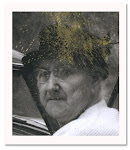
The question I have is...who is that little old lady in the hat? I don't remember her at all and I wonder what her story was. But I bet she was very clean. And why have I forgotten the name of the waitress? For so long I remembered her name, but no more.

Here's to us, for 50 years, best friends. Sisters.